
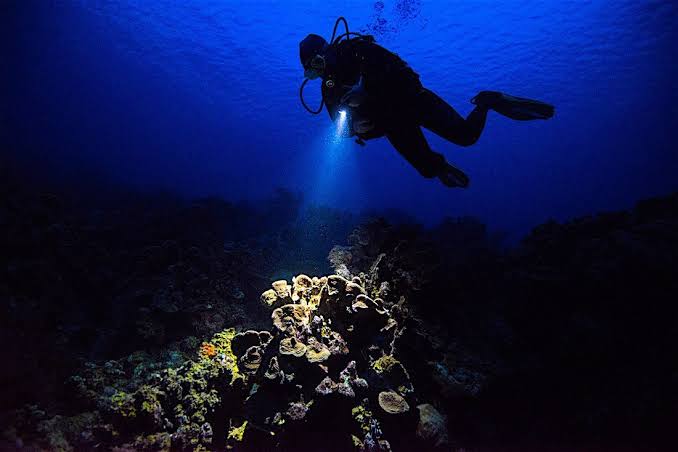
Night diving in Mirissa offers certified divers a completely different underwater experience from daytime scuba diving.
As daylight disappears, the reef changes. Many marine creatures become more active, others settle into the reef for the night, and the underwater environment takes on a completely different atmosphere under the beam of a dive torch.
For certified divers looking for a unique scuba diving experience on Sri Lanka’s southern coast, a night dive in Mirissa can be one of the most memorable ways to explore the ocean.
Night Diving Schedule in Mirissa
Night dives are usually arranged around sunset so divers can enter the water as natural light begins to disappear.
A typical schedule may look like this:
5:30 PM – 6:00 PM
Arrival at the dive center, registration and equipment check.
6:00 PM – 6:30 PM
Night diving briefing, safety instructions and preparation before boarding the boat around sunset.
6:30 PM – 7:30 PM
Enter the water and complete the night dive.
Average underwater dive time is usually around 40–45 minutes, depending on air consumption, depth, sea conditions and the planned dive profile.
7:30 PM – 8:00 PM
Return to the dive center, hand over or clean equipment and complete logbook entries.
The exact departure and return times may vary depending on sunset time, weather conditions, currents and the selected dive site.
What Can You See During a Night Dive?
One of the biggest attractions of night diving is the opportunity to observe marine life behaving differently from what divers usually see during the day.
Nocturnal Marine Life
Certain marine animals become more active after sunset.
Depending on the dive site and natural conditions, you may encounter:
Lobsters
Crabs
Moray eels
Shrimp
Small reef creatures
Other nocturnal marine species
These animals may emerge from cracks, rocks and reef structures to move around and search for food.
Sleeping Fish and Turtles
At night, many fish become less active and rest in protected areas around rocks and coral formations.
Divers may also occasionally observe turtles resting in sheltered parts of the reef.
All wildlife should be viewed carefully without touching, chasing or disturbing the animals.
Bioluminescence
Another exciting feature of some night dives is bioluminescence.
When conditions are suitable, tiny plankton in the water can produce small blue or green flashes of light when the surrounding water is disturbed.
During an appropriate part of the dive, your Divemaster may ask the group to temporarily cover or switch off their lights so this natural effect can be observed safely.
Bioluminescence is a natural phenomenon and cannot be guaranteed on every dive.
What Is Included in a Night Diving Package?
A typical night diving package in Mirissa includes the essential equipment and professional support required for the dive.
Basic Scuba Diving Equipment
Rental equipment generally includes:
BCD – Buoyancy Control Device
Regulator
Alternate air source / Octopus
Pressure gauge
Wetsuit
Mask
Fins
Scuba tank
Weights
Night Diving Equipment
Night diving requires additional lighting equipment.
This normally includes:
Main dive torch
Backup dive light
A reliable underwater light is essential for navigation, communication and observing marine life during the dive.
Professional Dive Guide
Night dives are conducted with the guidance of a certified PADI or SSI Divemaster or Instructor.
Before entering the water, you will receive a detailed briefing covering:
Dive site information
Entry and exit procedures
Torch signals
Buddy procedures
Navigation
Emergency procedures
Maximum depth
Night diving safety rules
Boat Transportation
Boat transportation to and from the selected night dive site is generally included when required.
Requirements for Night Diving in Mirissa
Night diving is intended for certified divers with suitable training and recent diving experience.
Depending on the dive center, your certification level and previous experience may be reviewed before the dive.
Diving Certification
You should bring a recognized scuba diving certification card.
This may include certification from organizations such as:
PADI
SSI
NAUI
CMAS
Other internationally recognized diving organizations
Some dive centers may require previous night diving experience, Advanced Open Water certification, or completion of a supervised Night Adventure Dive.
If you have never completed a night dive before, the dive center may recommend additional instruction or a supervised training dive.
Logbook
Bring your dive logbook so the team can review:
Your number of completed dives
Your previous night diving experience
The date of your most recent dive
Medical Fitness
As with any scuba diving activity, participants may be required to complete a medical questionnaire before diving.
If you have certain medical conditions, medical clearance from a qualified doctor may be required.
What Should You Bring for Night Diving?
Although most essential diving equipment is provided, you should bring a few personal items with you.
Important Documents
Bring:
Diving certification card
Dive logbook
Passport or ID if requested
Personal Items
We recommend bringing:
Swimwear
Towel
Dry clothes
Light jacket or warm clothing for after the dive
Drinking water
Even in a warm destination such as Mirissa, you may feel cooler after a night dive, especially after spending time underwater.
Personal Diving Equipment
If you own your own equipment, you may bring:
Personal dive torch
Backup light
Dive computer
Mask
Fins
Wetsuit
Always make sure any personal underwater light is properly charged and suitable for scuba diving.
Is Night Diving Different from Day Diving?
Yes. Night diving requires a slightly different approach from normal daytime scuba diving.
Visibility is limited to the area illuminated by your dive torch, so divers need to pay more attention to:
Their buddy
Torch signals
Depth
Direction
Air supply
Buoyancy
Dive guide instructions
Because the environment is darker, maintaining good buoyancy control and staying close to your buddy and guide is especially important.
However, for appropriately trained certified divers, night diving can be an exciting and enjoyable way to experience familiar dive sites from a completely different perspective.
How Long Does a Night Dive Take?
A typical night dive lasts around 40–45 minutes underwater.
Including:
Registration
Equipment preparation
Briefing
Boat transfer
The dive itself
Return to the center
the entire experience usually takes approximately 2 to 2.5 hours.
Actual duration may vary depending on sea conditions, dive site location, diver experience and air consumption.
Payment Options
Depending on the dive center, payments may be accepted in:
Sri Lankan Rupees (LKR)
US Dollars (USD)
Credit or debit card
It is recommended to confirm the latest price and available payment methods when making your booking.
Who Is Night Diving Suitable For?
Night diving is ideal for certified divers who want to experience a more adventurous side of scuba diving in Sri Lanka.
It is especially suitable for:
Certified recreational divers
Divers with good buoyancy control
Advanced Open Water divers
Divers with previous night diving experience
Divers completing a supervised Night Adventure Dive
Underwater photographers interested in nocturnal marine life
If you have not dived for a long period, a refresher session may be recommended before participating in a night dive.
Experience Night Diving in Mirissa
The underwater world changes dramatically after sunset.
With only your dive light illuminating the reef, night diving in Mirissa gives you the opportunity to observe nocturnal marine life, resting reef species and, when conditions are right, beautiful natural bioluminescence.
With professional guidance, appropriate equipment and suitable diving conditions, a night dive can become one of the most unforgettable scuba diving experiences on Sri Lanka’s southern coast.
Book your Night Diving experience in Mirissa and discover what happens beneath the surface after dark.